
Start here
If your week starts at the train
Choose the station first, then test the walk, drive, parking, drop-off, and the errand you can still do after a late train.
Daily-life guide
Tourists see the Avenue and the waterfront estates. Residents live a quieter version: a station and a parking spot, a short list of repeat errands, a beach or park habit in season, a dinner you can fall back on, and a house that keeps a calendar of its own. This guide is about getting those everyday pieces working, and it points to the deeper guides when a decision deserves them.
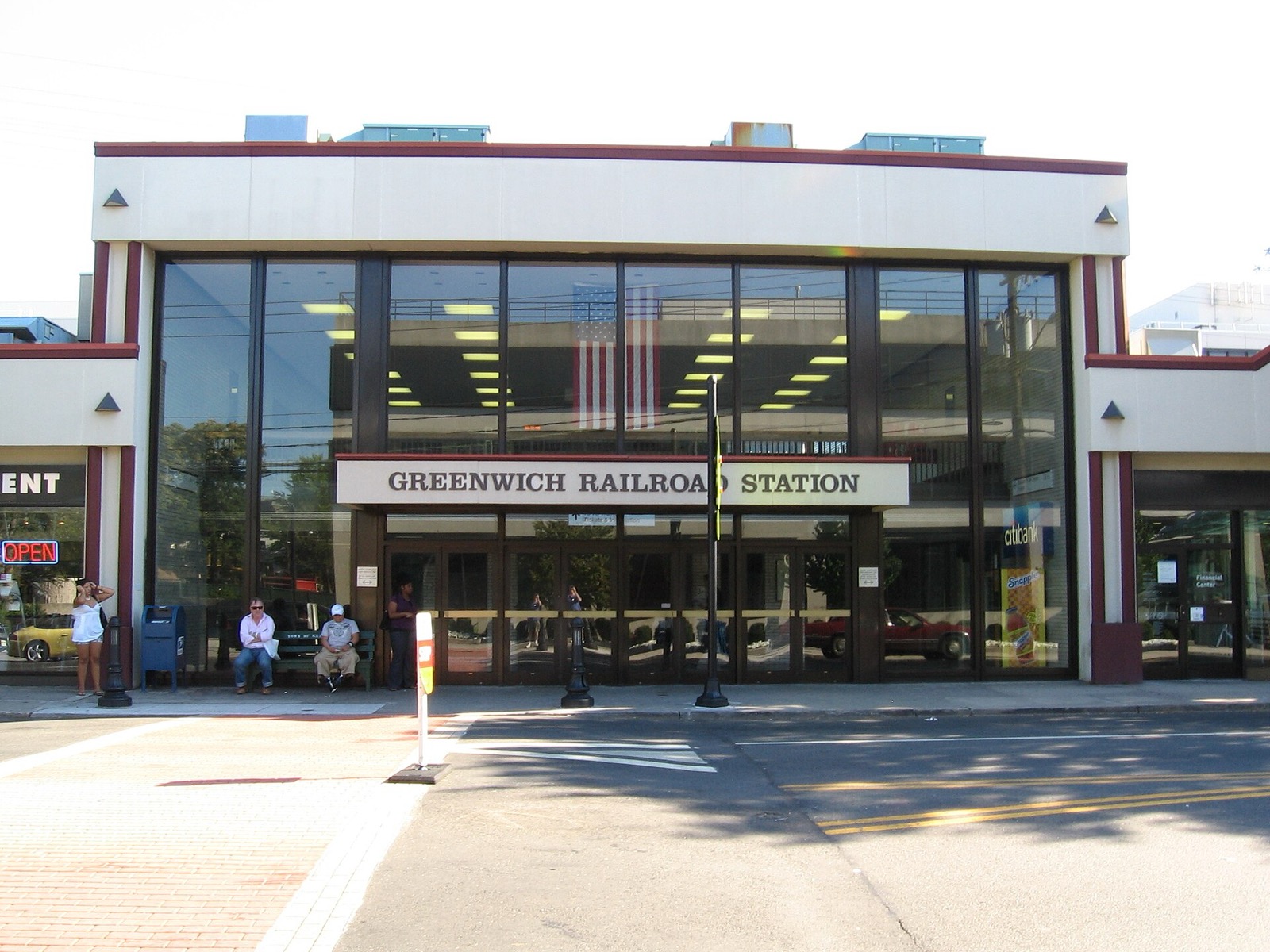
Most Greenwich advice opens with neighborhood names. Start instead with the part of the week you most want to run smoothly: the train, school pickup, house upkeep, a beach-and-dinner day with guests, or a low-key weekend. Pick the one that matters, then work backward to the block.
Start here
Choose the station first, then test the walk, drive, parking, drop-off, and the errand you can still do after a late train.
Start here
Open the official Greenwich Public Schools pages before listening to neighborhood shorthand. The daily issue is usually pickup, activities, buses, and the route home.
Start here
Make the house file early: private trash hauler (the town does not collect), property-tax and permit records, drainage notes, tree and storm contacts, the seasonal leaf-blower rules, and utilities. It is far easier before something breaks.
Start here
Keep one low-friction plan ready: an Avenue walk, a Bruce Museum or library backup, and a beach or park stop — but check the official pass pages first, because visitors cannot buy at the gate.
If you are new here, child-free, not-yet-school-focused, empty-nesting, or just trying to make Greenwich feel usable before it feels familiar, pick a few defaults you can actually repeat. You do not need a forever answer in month one; you need a train habit, an Avenue default, a dinner fallback, a wellness or culture loop, beach-card awareness, and one weekend rhythm you can repeat.
First-month default
Test the real morning and evening trip to your likely station, then pair it with one post-train dinner, grocery stop, or pickup plan.
First-month default
Pick a regular coffee stop, one weekday lunch, and one parking pattern so a downtown run is not a fresh decision every time.
First-month default
Choose the kind of meal you need — quiet, polished, family-safe, quick, or guest-friendly — instead of treating every restaurant list as a ranking. Keep a weekend brunch in your back pocket too.
First-month default
Try one routine that fits before the train, after work, on a rainy week, or around a low-commitment library or Bruce Museum stop.
First-month default
Learn where pass, parking, ferry, swim-status, and Tod’s Point rules live before summer guests are already asking what is possible.
First-month default
Use the Monthly Planner for month-ahead holds and This Weekend for the current short list; the goal is a repeatable rhythm, not a packed calendar.
Keep this deliberately small. Greenwich gets easier when you stop remaking the same decisions: where to park, where to meet, which station actually works, what to do when guests visit, and which official pages to check before promising a beach or ferry plan.
Copy these six prompts into a shared note. Fill them in with places that fit your actual week, then revisit them after a month instead of chasing a perfect Greenwich routine immediately.
| Default | Fill in | Reality check |
|---|---|---|
| Train and pickup | My normal station or pickup spot is: ________ | Test the route once in the morning and once after work; note parking, drop-off, or ride-share hassles. |
| Coffee or quick lunch | The easy weekday meet-up is: ________ | Choose one Greenwich Avenue, Old Greenwich, Cos Cob, Riverside, Byram, or Glenville option you can repeat without planning. |
| Weeknight dinner | Our no-drama dinner fallback is: ________ | Pick by arrival, noise, booking pressure, parking, and whether it still works after a late train. |
| Visitors | When friends or parents visit, we will use: ________ | Pair one Avenue walk or meal with one beach, park, library, Bruce Museum, or rainy-day backup you have checked before promising it. |
| Errands | Groceries, pharmacy, and returns point toward: ________ | Decide whether your real loop is downtown, Old Greenwich/Riverside, Cos Cob, west side, Port Chester, Stamford, or delivery. |
| Weekend plan | This month we should hold time for: ________ | Use the Monthly Planner first, then the weekend guide when dates, weather, tickets, and availability are clearer. |
Greenwich, Cos Cob, Riverside, and Old Greenwich create different commute habits.
Test the full door-to-train route, including parking or drop-off, before choosing a neighborhood around it.
Downtown, Old Greenwich, Riverside, Cos Cob, Byram, Glenville, backcountry, and shoreline areas solve different problems.
Compare daily errands, school pickup, weekend routines, and drive times — not just house photos.
The GPS site is the official path for calendars, registration, residency verification, school finder, bell times, and transportation.
Look beyond the school name: pickup, activities, buses, sports, after-school plans, and parent communication shape the week.
Tod’s Point, Byram Park, town parks, and seasonal beach/boating rules matter, but access details change.
Use official Town pages for passes, tickets, swim status, ferry, and facility rules before building routines.
Trees, storms, snow, generators, pools, landscaping, older homes, renovations, and service providers become part of the calendar.
Build a trusted local service shortlist before the urgent moment arrives.
Greenwich Avenue is useful, but not every day needs downtown.
Identify the places you will use on repeat: grocery, pharmacy, coffee, family dinner, urgent care, hardware, dry cleaner, and a rainy-day kid option.
Locals carve the town into three broad bands: downtown or in-town near the train, midcountry between the Post Road and the Merritt Parkway, and backcountry north of the Merritt, where lots get larger and seclusion is the point. Downtown means easier access to the train, the Avenue, restaurants, and appointments. Old Greenwich and Riverside are the close-knit shoreline villages oriented around Tod’s Point and the water. Cos Cob, Byram, and Glenville each run on their own errand loops, drive times, and Westchester or Stamford access. The neighborhoods guide breaks down how each one feels day to day.
None of that is a ranking. It is a reminder to test your real week — the school run, the commute, the grocery loop, the property upkeep — before deciding what “Greenwich” means for your household. Newcomers learn quickly that people here say “the Avenue” or “the Ave,” rarely “Greenwich Avenue.”
Greenwich Public Schools runs the official site for calendars, registration, residency verification, the school finder, bell times, parent resources, and transportation — start there, not with neighborhood hearsay, because which school serves an address depends on the finder, not the listing. For families, the question is rarely one perfect amenity. It is the weekly choreography: school, activities, sports, pickups, camps, library events, and a dinner that does not require crossing town at rush hour. The schools overview walks through how to read it.
Most commuters compare four Metro-North stations: Greenwich, Cos Cob, Riverside, and Old Greenwich. Greenwich main station catches the faster express trains to Grand Central; the other three are local stops a few minutes longer. Commuter-parking permit lists can run long, especially at the main station, which quietly shapes where people choose to live. The right answer depends on your block, how you get to the platform, parking or drop-off, and whether you are hybrid. Use the Metro-North guide to plan the trip, MTA for current schedules, and Greenwich Parking Services for permit and lot rules.
Homeowner life here runs on trees, storms, snow, standby generators, pools, landscaping, older-home upkeep, renovations, and a short list of people you trust to show up. The heavy tree canopy that makes the town beautiful also makes it outage-prone, so generators are common, especially in backcountry. Build the service shortlist before the pipe bursts, the tree falls, or the pool needs attention an hour before guests arrive. The homeowner guide covers the recurring operations in more depth.
A few practical realities catch almost everyone moving here:
Confirm every one of these on the official pages below before you act on a number; the dates and figures shift with each season and budget cycle.
One near-term heads-up if you drive the north end of town: North Street, over West Brothers Brook, is set to fully close around June 8 through late August 2026 for a bridge replacement, with detours posted by the Town. Bridge timelines slip, so check the Town or Greenwich Free Press for the current closure window before you plan around it. Expect cut-through streets in mid- and backcountry to clog while it is closed, and pad your timing for school, camp, and train runs.
Town Hall is at 101 Field Point Road, and the Town lists 203-622-7700 as its main number. These are the official pages worth saving on day one; they are the source of truth for the rules and figures above.
Less glamorous than the reputation and more about logistics. A normal week runs on a train or pickup routine, a short list of repeat errands, a beach or park habit in season, and a house that needs attention. Locals call it "the Avenue," not "Greenwich Avenue," and the town splits into downtown/in-town near the train, midcountry, and backcountry north of the Merritt — each a different daily map.
It matters, but it is not the whole town, and it is changing — St. Moritz Bakery closed in 2025 after nearly 90 years, while NYC imports like maman have moved in. Old Greenwich, Riverside, Cos Cob, Byram, Glenville, backcountry, and the shoreline all run on their own errand loops, and plenty of weeks never need downtown at all.
No. There is no municipal curbside trash collection — residents either hire a private hauler or buy a permit to self-haul to the Holly Hill transfer station. It surprises almost every newcomer, so set it up in your first week. Check the Town of Greenwich site for current Holly Hill permit details.
No. Single-entry park and parking tickets for Greenwich Point (Tod’s Point) and Byram Park are bought online in advance, not at the gate; residents use an annually verified pass. Park passes are required May 1–October 31. The lot at Tod’s Point is finite, so on hot summer weekends it fills and cars get turned away. Confirm current passes and prices on the Town Passes & Tickets page.
Greenwich restricts gas-powered leaf blowers in residential zones from 6 p.m. the Friday before Memorial Day through September 30 (extended to the day after Labor Day for properties of 2+ acres), with daily time limits and a Sunday commercial ban. Many landscapers switched to electric. See the Town’s Noise Ordinance page for the current rules.
Greenwich main station gets the faster express trains to Grand Central; Cos Cob, Riverside, and Old Greenwich are local stops a few minutes longer. Commuter-parking permit lists can be long, especially at the main station, which is a real factor in where people choose to live. Test the full door-to-train trip before committing, and use MTA and Greenwich Parking Services for current schedules and permit rules.
Yes, and inventory is tight. The single-family market has been moving up with very few homes for sale, so pull a current brokerage report rather than trusting a number you read months ago. Note that the town completed a 2025 revaluation that raised assessments for many homeowners, with new values hitting the July 2026 tax bill — a higher assessment does not translate one-to-one into a higher bill because the mill rate adjusts.
Bookmark the Town of Greenwich, Greenwich Public Schools, Parks & Recreation, Beaches & Boating, Greenwich Point Park, Greenwich Parking Services, and MTA Metro-North pages. They are the source of truth for calendars, permits, passes, swim status, and schedules, all of which change seasonally.
The Greenwich Weekend List
A short local email with weekend events, dinner ideas, kid-friendly stops, beach and park reminders, and a few Greenwich notes to check before you leave the house.